Soccer recruiting runs on a clock that surprises most families when they first encounter it — especially if they have experience with other sports. A D1 women's soccer program can, and regularly does, extend verbal offers to 9th-graders who haven't finished their first year of high school. Some elite programs are tracking prospects at U-13 and U-14 events before high school begins. For the families those offers are going to, this timeline is normal. For everyone else, it's alarming — and often misread.
The misread goes in two directions. Some families see the early commitment headlines and panic, assuming that any athlete who hasn't been identified by sophomore year is finished. That's wrong. The early commitments are concentrated at the very top of the D1 talent pyramid. Most soccer athletes — including many who will play D1 — recruit on a much more conventional schedule. Other families assume there's plenty of time and don't start until junior year, missing windows that had already closed for their target programs. That's also wrong.
This article maps the soccer recruiting timeline specifically: when coaches can contact recruits, when families need to act, how women's and men's soccer differ, and what the right pace looks like at each division level.
Why soccer recruiting starts earlier than most sports
Two structural factors push soccer recruiting earlier than almost every other college sport.
The ECNL and national showcase circuit operates year-round. Elite club soccer has a built-in evaluation infrastructure. College coaches attend ECNL showcases, ECNL Regionals, and similar high-level tournament events where dozens of programs are watching the same pool of prospects simultaneously. This creates a competitive market where programs that identify a prospect early have an advantage over programs that wait. Coaches don't wait.
Verbal offers aren't restricted by NCAA contact rules. D1 coaches can't call, text, or message a recruit until June 15 after the athlete's sophomore year — the same date that applies to most NCAA sports, and the same for both men's and women's soccer. But a non-binding verbal offer can be extended at any time, and in elite women's soccer especially, programs use early verbal offers to lock in prospects well before that formal contact date. The result is a shadow timeline that runs years ahead of the official one.
Both factors compound: coaches can communicate earlier, and the club circuit gives them infrastructure to evaluate earlier. The result is the compressed timeline that soccer families encounter.
The soccer recruiting timeline by graduation year
8th grade and before:
Elite D1 programs at the highest level — the programs competing for national championships — track prospects at top-level club events before high school begins. For the vast majority of families, this stage is not active recruiting. It's foundational: is your athlete on the right club team, competing at the level that puts them in front of college coaches? If your athlete is playing U-13 or U-14 ECNL or ECNL Regional League, they are in the evaluation pool. If they're playing at a lower club level, the path to D1 recruiting runs through improving performance and moving up in competition level — not through contacting coaches directly at this age.
9th grade:
Coaches still cannot initiate contact at this stage — under NCAA rules, that doesn't begin until June 15 after sophomore year. For elite women's programs, though, the verbal-offer culture means relationships and even non-binding offers can form early through the club circuit. Athletes targeting D1 should be on competitive club teams, attending the showcases that D1 coaches attend. Families can email coaches at any level with no restriction. Direct outreach from athletes to coaches is always permitted; the rules govern only when coaches can initiate.
The same contact rule applies to men's soccer — coaches can't initiate until June 15 after sophomore year — so freshman year is preparation. But athletes can and should attend college soccer camps at target programs, which are legal at any age and highly valuable. A camp creates a legitimate opportunity for the coaching staff to evaluate your athlete in person before the contact window opens.
10th grade:
June 15 after sophomore year is the date D1 coaches can first call, text, and message recruits — the start of the official contact window for both men's and women's soccer. On the women's side especially, D1 prospects start receiving coach communication, campus visits, and in some cases verbal offers right away. An athlete who hasn't received D1 attention by the end of sophomore year is not necessarily out of D1 — they may simply not be at the right club or showcase level yet, or they may be a D2 or D3 prospect on a longer timeline.
For D2 and D3 women's soccer, sophomore year is when direct outreach from athletes makes sense. Coaches at these levels recruit on longer timelines but appreciate early initiative. An athlete who emails a D2 coach with film sophomore year, follows up junior year, and attends an unofficial visit is more memorable than one who appears in senior fall.
11th grade:
By junior year the D1 contact window is fully open for both men's and women's soccer (it opened June 15 after sophomore year). This is when outreach, camp visits, and official recruiting conversations accelerate. Athletes should have their film updated, a finalized target list, and initial emails sent.
For D1 women's soccer athletes who don't yet have offers by junior year, the window narrows but is not closed. Many D1 programs — particularly outside the elite tier — continue recruiting through junior fall and into junior spring. D2 and D3 programs recruit actively throughout junior year.
By the end of junior year, athletes should have genuine signals from coaches about where they fit. Consistent silence from a target division is information, not just absence. If D1 programs aren't responding with interest by junior spring, the target list should shift to include a realistic D2 and D3 range.
12th grade:
D1 recruiting closes for most programs well before senior year begins. D2 programs actively recruit seniors — particularly in senior fall, when they can extend offers to athletes who've committed elsewhere and decommitted, or who weren't previously on their radar. D3 programs recruit heavily in senior year. NAIA programs recruit through senior spring.
A senior without a commitment is not out of options. They may simply be in the division where they belong.
| Division | When active contact typically begins | When offers typically arrive | What families should prioritize |
|---|
| D1 Women's | June 15 after sophomore year (coaches); athletes can always reach out | Sophomore–junior year for elite programs; junior year for others | Top club level, ECNL showcases, camp attendance |
| D1 Men's | June 15 after sophomore year (coaches); athletes can always reach out | Junior fall–spring | College soccer camps, film quality, junior year outreach |
| D2 | Junior year | Junior spring–senior fall | Direct outreach, unofficial visits, national signing period |
| D3 | Junior–senior year | Junior spring–senior spring | Proactive outreach, academic fit, coach relationship |
| NAIA | Junior–senior year | Junior spring–senior spring | Direct outreach, open communication, scholarship flexibility |
Women's vs. men's soccer: key differences
The women's and men's games differ meaningfully in recruiting structure, and treating them as identical creates problems.
Scholarship funding varies at D1. Under the House v. NCAA settlement, the D1 soccer programs that opted in operate under a 28-player roster limit for both men's and women's programs (conferences can set lower limits). Those schools can offer full scholarships to every rostered player, but in practice most programs — especially on the men's side — still distribute scholarship money as partial awards due to budget constraints. The practical effect: competition for full funding remains intense, and men's programs with historically smaller budgets are even more likely to offer smaller partial scholarships. Athletes targeting D1 men's soccer should understand that a meaningful scholarship offer at a mid-tier D1 program is genuinely good — not a consolation.
The contact rule is the same; the pace isn't. Both men's and women's D1 soccer share the same June 15 after sophomore year contact date. What differs is the culture: women's soccer's verbal-offer and early-commitment norms, fueled by the ECNL circuit, push the practical timeline earlier than on the men's side — even though the rule is identical.
The club ecosystem differs. ECNL is the dominant pathway for elite women's soccer. Men's soccer has the ECNL and MLS NEXT, and the club landscape for men is somewhat more varied. Understanding which clubs and showcases your target coaches attend is more important than club brand name recognition alone.
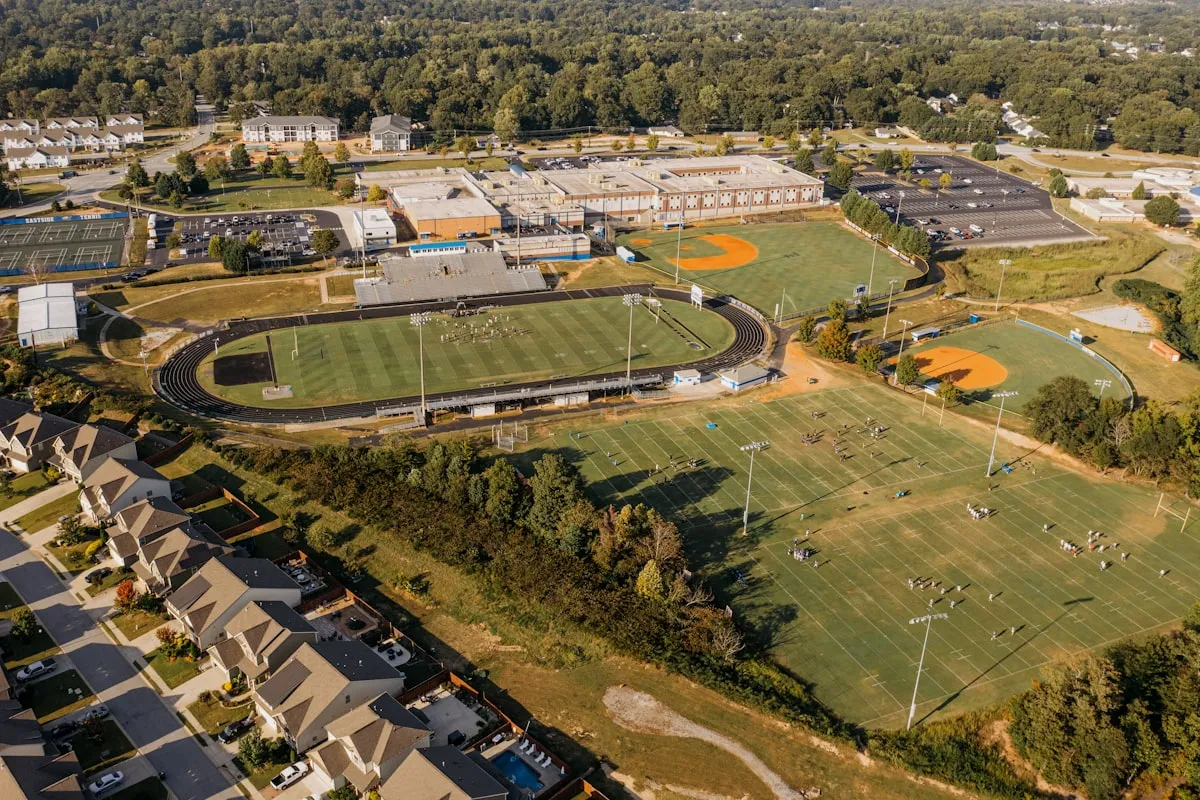
What soccer coaches look for — and when
D1 coaches evaluate through the club circuit first, college camps second, and direct outreach film third. The weight of each differs by level.
Club performance at high-level showcases is the primary filter for D1 and upper D2 programs. Coaches at ECNL Showcases, Jefferson Cup, Top Drawer events, and similar tournaments are actively building recruiting boards. Being on the right team at the right events is the prerequisite for being seen.
College soccer camps are the mechanism coaches use to evaluate athletes they've heard about but haven't seen in person. Attending a camp at a target school — where the coaching staff runs the sessions — gives coaches a controlled environment to see your athlete's technical quality, coachability, and how they look at the college level. For D1 soccer, where formal contact doesn't begin until June 15 after sophomore year, attending sophomore-year camps at target schools is how you build the relationship before the window opens.
Film and direct outreach matter most at D2, D3, and NAIA levels, and for athletes targeting programs that won't be at every major showcase. A well-organized email with a highlight link sent to a D2 coach can start a real conversation. Don't wait to be found at the showcase level if your target programs are in divisions that recruit more through direct contact.
The bottom line
Soccer families need to know their specific clock — the D1 contact window opens June 15 after sophomore year for both men's and women's programs, but women's soccer's verbal-offer culture pushes the practical pace much earlier, and D2 and D3 have more time than the D1 conversation suggests. The error most families make is letting the women's-side panic pace define the process for athletes who are targeting a different division.
For the full process from club play to a college roster, see how to get recruited for college soccer, and the soccer athletic scholarships guide breaks down what a realistic offer covers at each division. If your athlete is trying to assess their fit for specific division levels, our soccer recruiting standards guide covers what coaches evaluate and what benchmarks matter at D1, D2, and D3. When you're ready to contact coaches, the guide to how to email a college coach covers what to send, when to send it, and what coaches actually respond to. And if you're weighing whether paying for recruiting help is worth it, our NCSA soccer review gives you an honest answer for soccer families specifically. GetRecruited turns this timeline into a personalized plan keyed to your athlete's gender, graduation year, and realistic division.